
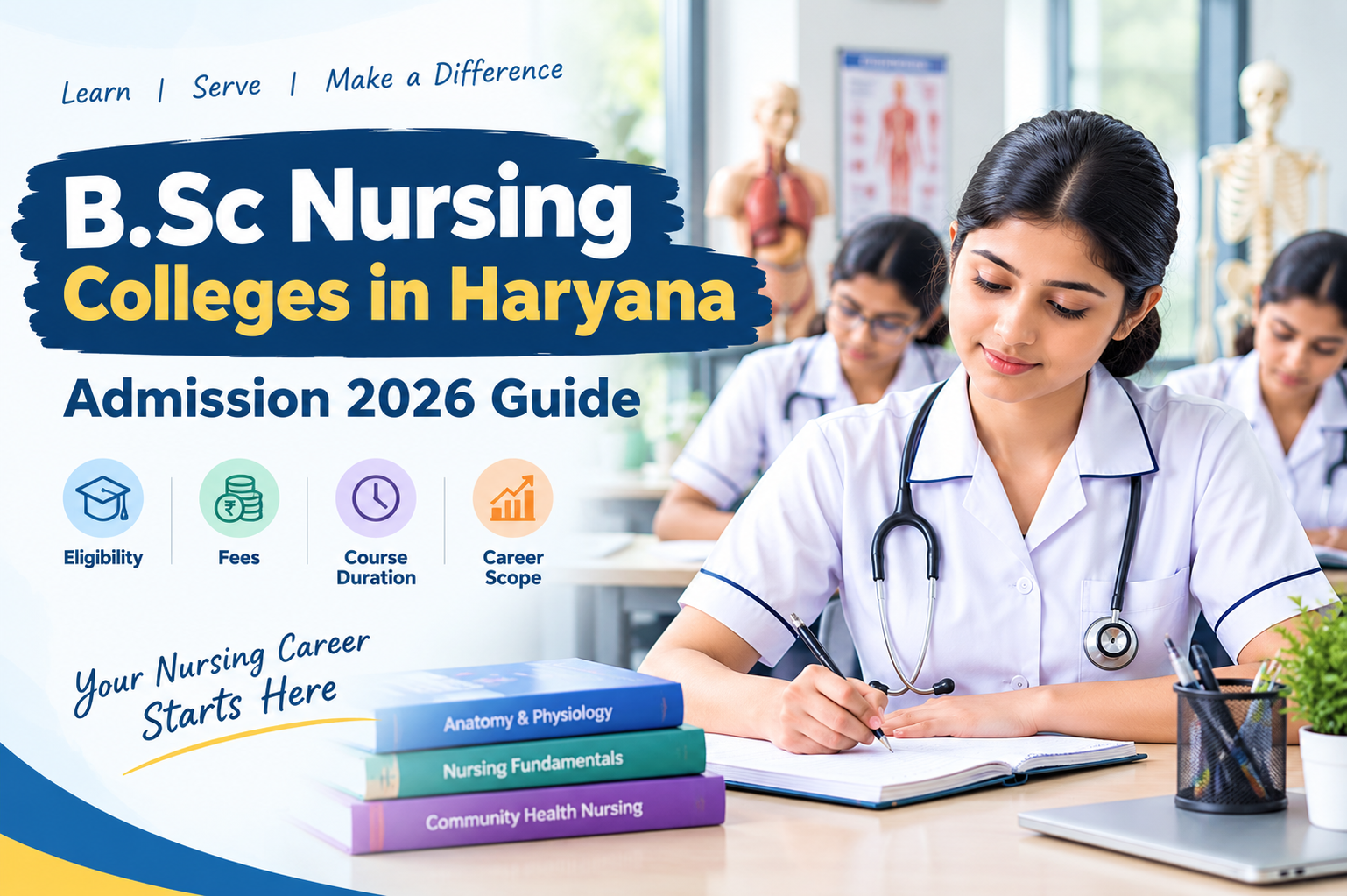
Choosing the right nursing college is an important step for students who want to build a career in healthcare. With growing demand for qualified nursing professionals in hospitals, clinics, community health programmes and other healthcare settings, nursing education offers students an opportunity to develop practical skills and professional knowledge.
For students planning to study nursing, finding the right B.Sc Nursing colleges in Haryana involves more than comparing college names. Students should understand the eligibility criteria, course duration, admission process, fees, clinical training facilities and future career opportunities before making a decision.
This guide explains the essential details of the B.Sc Nursing course and the factors students should consider when choosing a nursing college in Haryana.
What Is B.Sc Nursing?
Bachelor of Science in Nursing, commonly known as B.Sc Nursing, is an undergraduate professional degree that prepares students for nursing and patient-care responsibilities. The programme combines classroom learning, practical laboratory sessions and supervised clinical experience.
Students generally study subjects related to anatomy, physiology, nutrition, microbiology, medical-surgical nursing, community health nursing, mental health nursing and maternal and child health. The exact curriculum depends on the applicable academic regulations.
The course aims to develop clinical knowledge, communication skills, critical thinking, ethical awareness and the ability to work as part of a healthcare team.
Students interested in pursuing this programme can explore the B.Sc Nursing course information available on relevant college websites to understand the curriculum and admission requirements.
Why Choose B.Sc Nursing Colleges in Haryana?
Haryana is an option for students seeking professional nursing education in North India. The state has government and private institutions offering nursing programmes, although courses, facilities, fees and admission criteria differ between institutions.
When comparing nursing colleges in Haryana, students should consider the following factors:
- Recognition and affiliation: Verify the institution’s current approvals, affiliation and permission to offer the specific nursing programme.
- Clinical training: Ask about supervised clinical postings, practical exposure and access to suitable healthcare facilities.
- Faculty and academic support: Look for qualified teaching staff, practical learning opportunities and appropriate student guidance.
- Infrastructure: Check nursing laboratories, classrooms, library resources and other facilities relevant to the programme.
- Fee transparency: Request a written breakdown of tuition, examination charges, university fees, hostel costs and other applicable expenses.
- Location and accessibility: Consider travel, accommodation, safety and the practical convenience of attending classes and clinical postings.
Students searching for the best nursing colleges in Haryana should compare these factors rather than relying only on advertisements or unverified rankings.
B.Sc Nursing Eligibility Criteria
Eligibility requirements must be checked against the latest applicable nursing regulations and the institution’s current admission notification. Common eligibility considerations for a basic B.Sc Nursing programme include:
- Completion of Class 12 or an equivalent qualification with the required science subjects, commonly Physics, Chemistry and Biology.
- English as a subject, where required by the applicable rules.
- Meeting the prescribed minimum qualifying marks.
- Satisfying the applicable age criteria.
- Meeting any additional entrance examination, counselling or document requirements that apply to the admission route.
Minimum marks, age requirements and admission procedures may vary according to the applicable rules and candidate category. Students should therefore confirm the exact criteria before submitting an application.
Those researching B.Sc Nursing eligibility should prepare their Class 10 and Class 12 certificates, identification documents, photographs and other documents listed in the official admission notice.
B.Sc Nursing Course Duration
The standard B.Sc Nursing programme is generally four years long, subject to the applicable curriculum and regulatory requirements. It includes theoretical instruction, practical learning and supervised clinical experience.
During the programme, students develop an understanding of patient assessment, nursing procedures, health education, infection prevention, documentation and evidence-based care. Clinical learning helps them connect classroom concepts with real healthcare situations under appropriate supervision.
Students should check the current course structure, examination pattern, attendance requirements and clinical training arrangements with their chosen institution before admission.
B.Sc Nursing Fees in Haryana
The total cost of nursing education depends on the institution, applicable government fee rules and the services included in the programme. Students comparing B.Sc Nursing fees should request the latest official fee schedule rather than relying on old online figures.
Before enrolling, ask the college to clarify:
- Annual tuition and development charges, where applicable.
- Admission, registration and examination charges.
- Uniforms, books, laboratory and clinical-related expenses.
- Hostel, meals and transportation costs, if required.
- Refund policies and payment deadlines.
Request a written fee breakdown and confirm whether the published amount covers the full academic year or only selected components. Transparent fee information makes it easier for families to plan their education budget.
B.Sc Nursing Admission Process in Haryana
The admission process depends on the applicable state rules, counselling arrangements and the institution’s authorised admission procedure. Students should follow the official notification for the relevant academic session.
A typical preparation process includes:
Step 1: Research colleges. Shortlist institutions offering the programme and verify their current recognition, affiliation and course availability.
Step 2: Check eligibility. Confirm the required subjects, qualifying marks, age conditions and any entrance or counselling requirements.
Step 3: Review admission notifications. Check the official dates, application procedure, merit or selection method and applicable instructions.
Step 4: Prepare documents. Keep academic certificates, identification, photographs, category certificates where applicable and other required documents ready.
Step 5: Complete the authorised application process. Submit the application through the official route and retain the acknowledgement or application number.
Step 6: Confirm admission details. Before paying fees, verify the offer, fee schedule, required documents and reporting instructions.
Students searching for B.Sc Nursing admission 2026 should confirm the current session’s dates and procedures directly with the relevant official authority or institution. Do not assume that previous years’ deadlines or entrance requirements remain unchanged.
Career Opportunities After B.Sc Nursing
A B.Sc Nursing qualification can prepare eligible graduates for a range of nursing and healthcare roles, subject to applicable registration and employment requirements.
Potential career pathways include:
- Staff nurse in eligible hospitals and healthcare institutions.
- Nursing roles in clinics and specialised care settings.
- Community health and public health services.
- Maternal and child healthcare services.
- Nursing education or research after meeting the relevant additional qualifications.
- Further study and professional specialisation.
Employment opportunities depend on the graduate’s qualifications, registration status, skills, experience and the requirements of individual employers. Students should develop strong clinical knowledge, communication, teamwork and professional ethics throughout their education.
B.Sc Nursing or GNM: Which Course Should You Choose?
B.Sc Nursing and General Nursing and Midwifery (GNM) are different nursing education pathways. The right choice depends on the student’s academic background, career goals and eligibility.
B.Sc Nursing is an undergraduate degree programme generally lasting four years. GNM is a separate nursing programme with its own duration, curriculum and eligibility rules under the applicable regulations.
Students who meet the eligibility requirements for B.Sc Nursing may prefer to compare the degree’s academic structure and long-term study options with the GNM pathway. Those considering GNM should review its course details, clinical training, recognition and progression opportunities separately.
For a clearer decision, explore the relevant GNM course and ANM nursing course information on the college website, where these programmes are offered. Compare the actual course requirements instead of assuming that the programmes have identical admission criteria or career pathways.
How to Choose the Right Nursing College in Rohtak and Haryana
Students exploring nursing colleges in Rohtak or nearby areas should evaluate each institution using reliable information.
Start by confirming that the college is authorised to offer the specific programme for the intended academic session. Ask about the curriculum, practical training, faculty, laboratory resources, clinical exposure and student support.
Visit the campus where possible, review the published fee schedule and clarify the admission process. Students should also consider travel distance, accommodation arrangements and the total cost of attendance.
For local applicants, comparing institutions in Rohtak, Jhajjar and other parts of Haryana may help identify an option that fits their academic plans and practical needs.
Pyare Lal College of Nursing is an institution students can contact to enquire about its available nursing programmes, eligibility requirements, admission procedure and current fees. Applicants should confirm programme-specific details directly with the college before making an admission decision.
Conclusion:
Choosing from the available B.Sc Nursing colleges in Haryana requires careful research into eligibility, course duration, fees, clinical training and institutional recognition. Students who compare these factors and follow the latest official admission instructions can make a more informed decision about their nursing education.
For students exploring nursing education in the Rohtak and Jhajjar region, Pyare Lal College can be a starting point for enquiries about available courses and admission requirements. Contact the college to obtain current, verified information and determine whether its programmes align with your academic qualifications and career goals.
Frequently Asked Questions (FAQs)
- What is the duration of B.Sc Nursing?
The standard B.Sc Nursing programme generally lasts four years. Students should confirm the current curriculum and applicable regulations with their chosen institution.
- What are the eligibility criteria for B.Sc Nursing in Haryana?
Applicants generally need Class 12 with the prescribed science subjects and must meet the applicable marks, age and other admission requirements. Exact criteria should be checked in the current official notification.
- How much are B.Sc Nursing fees in Haryana?
Fees vary by institution and may include tuition, examination, registration, hostel and other charges. Request the latest written fee structure before admission.
- How can I apply for B.Sc Nursing admission in 2026?
Check the current official admission notification, verify eligibility, follow the authorised application or counselling process and submit the required documents within the stated deadline.
- What career opportunities are available after B.Sc Nursing?
Eligible graduates may pursue nursing roles in hospitals, clinics and community healthcare settings, or consider further education and specialisation, subject to applicable registration and employment requirements.